What did Al-Allaf say about Nouri Jaffar?
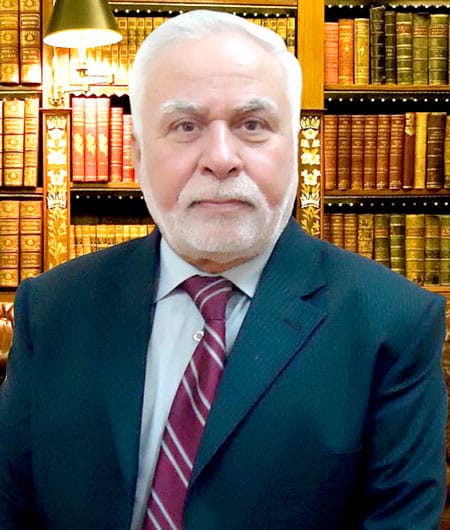
Professor Dr. Nouri Jaffar (1914–1991) The Scholar, Thinker, and Academic Professor Specializing in Education and Psychology On the 32nd Anniversary of His Passing
By: Professor Dr. Ibrahim Al-Allaf
I have studied his books and publications, which amount to more than 35 publications. In addition to his articles, studies, research papers, and lectures, and I have known him for more than 50 years. He was a professor and a progressive thinker, whose forward-looking outlook was reflected in his work. We must remember him and engage with his serious and constructive educational works. He taught at the University of Baghdad and at various universities in Libya.
I wrote about his book titled (Scientific and Technological Progress and Its Social and Educational Implications), and published my commentary on my page, stating: ‘A book by the late Professor Dr. Nouri Jaffar, published as part of the Encyclopaedia’ series (No. 13) by the Ministry of Culture Republic of Iraq, 1978.
A small book in size its pages do not exceed 50 in pocket format yet its content is vast and profoundly significant. It is an academic study by a progressive,enlightened, and well-known writer, in which he emphasizes that modern scientific progress is advancing at an extraordinary pace. The author examines the impacts of this progress on education, culture, and the arts, and highlights the reality that modern humanity has not risen morally and behaviourally to match the level of scientific and technological advancement evidenced by the use of scientific achievements for inhumane purposes.
I also wrote about his book co-authored with Dr. Abdel Razzaq Muhyi al-Din, titled (Reflections and Notes on Education in Iraq), and stated: It is one of the pioneering books written on education in Iraq, authored by Professor Dr. Abdel Razzaq Muhyi al-Din and Professor Dr. Nouri Jaffar. The book is essentially a collection of articles published in Iraqi newspapers. It was published in 1951 and printed at Azzahra Press in Baghdad.
The book focuses on education in Iraq, examining its foundations, scope, guiding philosophy, and tracing its stages since the establishment of national education. Among the topics covered in the book are: prescribed textbooks in higher institutes, equivalence of certificates, the Higher Education Council, the impact of education on human behaviour, the necessity of student care, the philosophy of education in Iraq, the influence of democratic and dictatorial philosophies on directing education, the philosophies of Iraqi society, and proposals for reforming the educational system. Both authors are pillars of education in Iraq and among its early pioneers’’ Among his substantive scholarly contributions is the work titled (Authenticity in The Fields of Science and Art), in which he examines the characteristic of creativity or innovation as a primary goal of education, particularly higher education in our present time of 2023. On page 53, he emphasizes that (innovation and creativity) are acquired traits that develop through training and practice, and are ultimately first and last the result of the interaction between an individual’s mental capabilities and the surrounding environmental factors. In his view, it is therefore essential to nurture, train, and guide the gifted and intelligent. Any nation aspiring to progress must prioritize innovation and creativity.
Among his widely cited statements is: ‘We aspire for the day, in the near future, when the classroom is transformed into a laboratory where students come to discover, investigate, and inquire even if much of what they uncover has already been achieved by others.’ Among his other authored works are books such as “Love Between The Heart and The Brain”, “Modern Views on The Interpretation of Child Growth and Upbringing”, “Science Fiction and The World of Children”, “Childcare in The Family – General Principles“, “With Al-Hariri in His Assemblies”, “Thought: Its Nature and Development”, “Language and Thought”, and “Suggestions for The Development of Education in Iraq”.
Moreover, in a piece I once wrote on December 30, 2016, about Professor Dr. Nouri Jaffar, which I revisit today as we honour his memory, I stated: ‘It is a beautiful thing that the beloved and venerable University of Basra is
honouring its distinguished son, a native of Al-Qurna, the great psychologist Professor Dr. Nouri Jaffar author of numerous works, patron of schools for the gifted, and originator of the theory of creativity… I was greatly delighted to hear of this from our friend Professor Dr. Abdul Karim Radhi Jaffar.’ May God have mercy on both Jaffar and Abdul Karim.
Professor Dr. Nouri Jaffar has a son named Ali, as well as three daughters: Alia, Khulood, and Nijood.
The late Professor Hameed Al-Matbouai wrote about Professor Dr. Nouri Jaffar in The “Encyclopaedia of Iraqi Figures and Scholars”, Expanded Edition, Baghdad 2011, stating: ‘Dr. Nouri Jaffar is a researcher in psychology who taught at the University of Baghdad. He was born in Al-Qurna district, Basra Governorate. He published his articles in Iraqi and Arab newspapers. Among his printed books are:
“Reflections and Notes on Education in Iraq” in 1951, “Education and Its Philosophy” in 1952, “History: Its Scope and Philosophy” in 1955, “Principles and Men” in 1958, “Philosophy of Education” in 1959, “Suggestions for The Development of Education in Iraq” in 1962, “Language and Thought” in 1971, Human Nature in The Light of Pavlov’s Physiology, Part One in 1971, “John Dewey: His Life and Philosophy” in 1954. He also authored numerous books and studies in physiology
and psychology, including his work “Human Nature in The Light of Pavlov’s Physiology: Sleep, Dreams, and Neurological Disorders, Part Two). Additionally, he wrote books on the philosophy of history and governance, such as “Ali and His Opponents”, “The Philosophy of Ruling in The View of the Imam”, and “The Conflict between the Umayyads and the Principles of Islam”. Among his important works is also the book “Psychological Aspects in Al-Jahiz’s Literature”.
He was also written about by his colleague, Professor Dr. Hussam Al-Alousi, former head of the Philosophy Department at the College of Arts, University of Baghdad. Furthermore, Yasser Jassim Qasim authored a book about him published in 2010 titled “Nouri Jaffar: Man of Renaissance and Reform”, which was introduced by the late Professor Dr. Abdul Karim Radi Jaffar. The book is available online.
How I wish that Professor Dr. Nouri Jaffar would become the subject of multiple books, master’s thesis, or doctoral dissertations. He truly deserves to be remembered and commemorated by us always.
I would only like to add that his sole nephew (Radi) I am referring to the late brother and friend, Professor Dr. Abdul Karim Radi Jaffar wrote the introduction to the book by Yasser Jassim Qasim, titled “Nouri Jaffar: The Man of Renaissance and Reform”, which I mentioned earlier.
Regarding his passing, he definitively put an end to many rumours and speculations, stating verbatim:
‘He passed away on November 7, 1991, in Libya at the age of 77 due to complications from influenza and was buried there. Everything that has been circulated about his death, such as ‘the assassination of the Iraqi mind’ or ‘a thief killed him’ is entirely untrue.’
Articles by Dr. Ibrahim Al-Allaf
- Symbols of Contemporary Iraqi Culture, Dr. Ibrahim Al-Allaf's Blog, 2025
- The book "Broad Educational Horizons in the Arab-Islamic Heritage" , Dr. Ibrahim Al-Allaf's Blog, 2025
- “Reflections and Notes on Education in Iraq”: One of the Pioneering Books Written on Education in Iraq, Authored by Dr. Abdul Razzaq Muhiuddin and Dr. Nouri Jaffar, Dr. Ibrahim Al-Allaf`s Blog, 2013
- "Al-Ustad Magazine," a magazine of the Higher Teachers' Training College, 1953-1969, by Dr. Ibrahim Khalil Al-Allaf, Al-Nour Center, 2011