Nurturing Thought
Nurturing Thought
By: Nijood Nouri Jaffar
I begin by expressing my profound gratitude to Professor Dr. Ibrahim Khalil Al-Allaf for his valuable suggestion and encouragement to write about my late father, Professor Dr. Nouri Jaffar, specifically concerning his approach to raising his children. It is my pleasure to respond to this constructive proposal and to write, as concisely as possible, about the methodology of his upbringing of us.
I commence my remarks about my father, Nouri Jaffar, by stating that he was, in every sense, a compassionate father in his dealings with us, remarkably open-minded in his educational outlook towards us. Dialogue was his consistently preferred method, and respect was his manner.
Following the early passing of my mother in 1975, my father may God have mercy on him, made us feel an unparalleled tenderness and care, filling the void left by our mother’s departure in an indescribable way. He enveloped us in his abundant love, dedicated the greater part of his life to us and our upbringing, and sacrificed the remainder of his years for his scholarship and for us. He would often reiterate to us his constant refrain: ‘’Your mother entrusted you to me, and I am bound to protect you.’’
He became both a father and a mother to us, as he described himself, saying:
“I am the head of a family, a father, a mother, a friend, and a faithful guardian…” And he embodied the poet’s verse:
“Even the resolute may know despair, and a man’s steadfastness is tested by fate’s calamities.
Days revisit him with successive trials, so he finds strength for one matter and weakness for another.”
Mother, allow me to address you this time. After your passing, I recall my father’s profound sorrow at your loss, and his love and fidelity towards you that endured until the last day of his life.
Forgive me, Mother, for what I am about to say… I once asked my father why he did not remarry or wed a foreign woman. He answered me with his warm smile:
“Nothing compares to your mother. I would not exchange her for a million foreign women, nor for all the women in the world.”
And he paid tribute to you with verses of poetry in his book “Human Nature in The Light of Pavlov’s Physiology – Part Two”, saying:
“To the partner of my life whom I was grief-stricken to lose (Um Alia),
I dedicate this modest intellectual effort: ‘the effort of the limited,’ and my state laments:
“As if no living soul had died but her, and as if condolences were meant for none but her.
If a living being could become a tomb for the deceased, I would make my entrails a grave for her bones.
Were I to wish to weep tears of blood for her, I would weep them, but the realm of patience is wider.
The world has not closed in on me due to its confines, but rather an eye with which I do not see you is blind.
And many beloved ones have departed from people before us, and the cure for death has exhausted every physician.”
I often marvel that my personality is sociable and cheerful like my mother’s, yet introspective, constantly reflective, and open like my father’s.
I cannot recall a day when my father was not engaged with me in intellectual dialogue, particularly concerning my work, my interactions, my ethics, and my mode of thinking.
“Who was Nouri Jaffar to me and my siblings?”
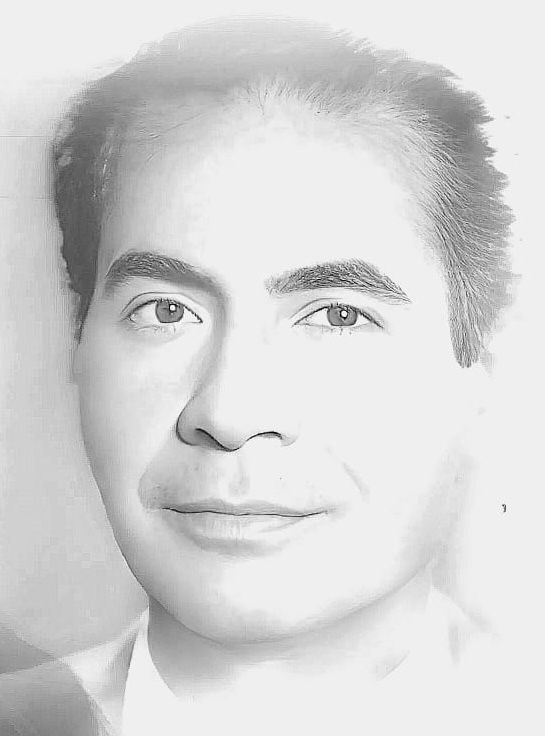
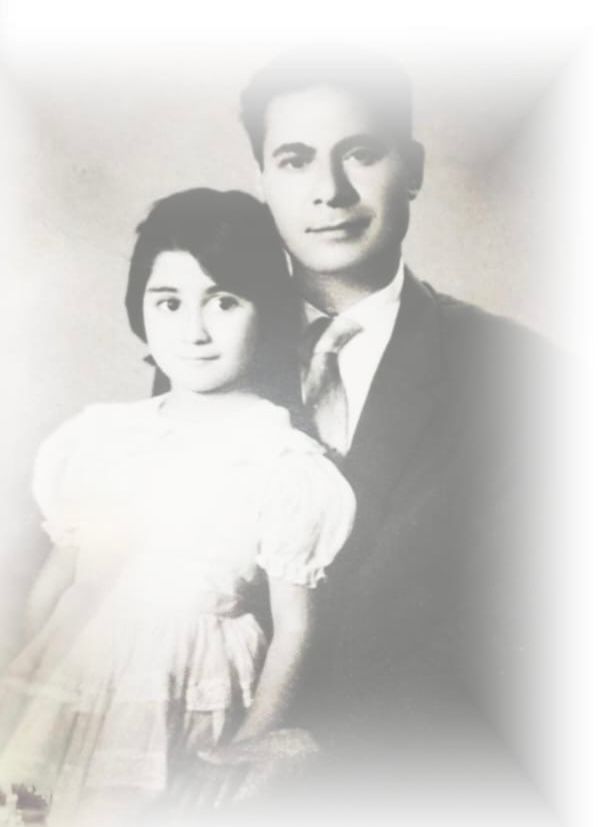
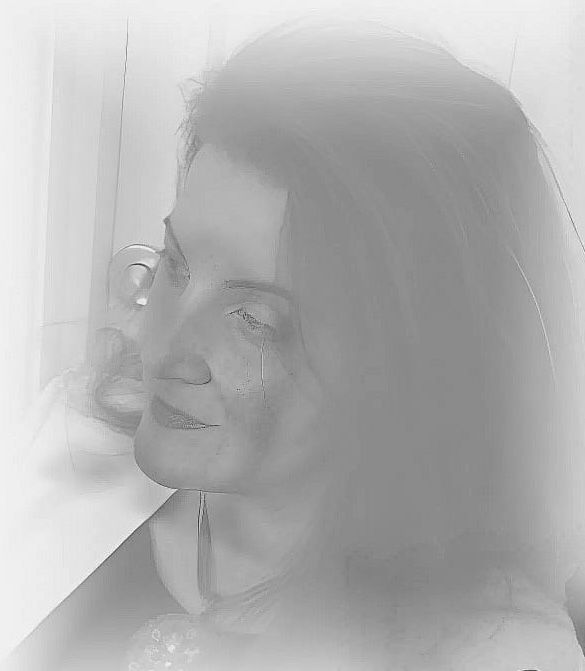
My father was gentle in character, affectionate towards us, and exceedingly receptive to our needs. He held deep respect for us, valued our opinions, and was considerate of our feelings. This is the foundation upon which I was raised through his upbringing and his dealings with us throughout the various stages of our lives. He was understanding of the mindset of each one of us, myself, and my siblings.
My journey with him began from my earliest years, and his influence endures to this day. I learned from him the practice of constant reflection; indeed, I was his pupil in how to confront life’s challenges. The understanding of the circumstances and causes underlying the stages of his life became deeply ingrained in me, until I found myself following in his footsteps spontaneously, without even realizing it! Glory be to God.
For my reservoir of strength, after God, I drew it from him: through steadfast certainty in principle, sincerity in conduct, and diligent commitment to continuous research to elucidate the truth of matters.
I will recount a small part of his method and the impact of his upbringing as I reflect upon the stages of my life spent with him and by his side.
1
A Seeker of Knowledge and Tales of the Immortals
I recall that I used to read to him from “Tales of the Immortals” a popular children’s series at the time about famous figures such as Shakespeare, Helen Keller, and Madame Curie. I would read to him during the afternoon siesta, an indirect method that allowed me to learn and pronounce Arabic, a language in which he was deeply proficient and passionately fond, while also coming to know the lives of renowned individuals who achieved global recognition through their ambition, knowledge, or discoveries.
Today, I read about him and his friendship and relationship with the American philosopher John Dewey, and I marvel at how he described Dewey as though describing himself through him. I am struck by the alignment of their ideas and personalities, despite a fifty-year age difference the same gap that exists between me and my father! And his influence on me resembles that which he shared with Dewey.
I admire his patience and resilience in facing challenges alone. His passion for knowledge bears witness to this, and it never occurred to me that such dedication could be matched until I read about the Russian scientist Ivan Pavlov in his book “Human Nature in The Light of Pavlov’s Physiology.” There, I found my father, like other scholars, generous and devoted to his field.
I remember once asking him why he continued to read constantly even after attaining the title of “scholar.” He replied with his gentle smile: “I am not a scholar; I am a seeker of knowledge. If I ever abandon reading for a day, it will not abandon me.” And everyone who knew him testifies to his knowledge, profound humility, humanity, and the refinement of his civilized character.
2
Trust and Respect for Privacy
Letters would often come to me from friends outside Iraq. When the postman arrived, my father would receive them without ever opening them and would hand them to me just as they were. Once, when I was around fourteen, I asked him why he did not open my letters. He replied, “These are yours and part of your privacy how could I open them?” He strengthened my trust in him and in myself by respecting my privacy from that early stage.
I cannot recall a single day when he voiced even the slightest strict objection or made a unilateral decision in any situation. On the contrary, he would discuss matters with us with complete openness, without ever making us feel uncomfortable. He was deeply attentive to understanding our individual temperaments and consistently maintained open dialogue with each of us according to our personality and needs. When a particular decision needed to be made, he would devote special care and attention to us, setting a time to meet with me and my younger brother Ali. He would present the topic to us, give us time to express our respective viewpoints, and then pose his questions. With his understanding and rationality, the final decision would be reached with the satisfaction and agreement of everyone, without hesitation.
Through my father’s civilized way of dealing with us, I applied his approach in my administrative work when I was responsible for a team. I began the steps exactly as he would have: setting a time based on the number of participants and the requirements of the topic, then initiating a clear and open discussion, and afterward adopting the most reasonable proposal even when it was sometimes difficult. But we reached solutions through open discussion, satisfying everyone. My joy is immense when managers praise my distinguished way of working with the team and ask me where I learned such an exemplary method of interaction. I answer spontaneously: “This is the approach my father practiced with us since I was young, and today I apply it in my work with the same positive results in harmony and agreement, grounded in a sound and steadfast principle.”
My father was open with us in discussion and in expressing opinions with honesty and candour, and he respected our privacy. Even with the simplicity of our understanding at the time, it never occurred to us to break his trust. On the contrary, we took every care to strengthen it through his clear and transparent approach to relational boundaries with others combining openness with discretion in a way that required understanding the limits of interaction.
Respect for privacy is, indeed, the key to building trust with others.
3
The Birth of a Book
I recall his dedication to his scholarship and publications. Whenever any of his books went to print, he would personally oversee the printing process and refine the text word by word. Once, I asked him why he exhausted himself in such a manner. His response was: “Printing a book has stages, like a foetus in its mother’s womb, it requires complete care before it is born and reaches the reader’s hands.”
He was diligent in his scientific research and took great care to follow every piece of information and every new development in his writings with meticulous attention.
I remember when I was at university, we had a research assignment in an insurance course. I went with a group of classmates to consult the professor of the course the late Professor Kazem Al-Sharbati about how to conduct the research. I introduced myself and my colleagues to him. Professor Al-Sharbati asked me, “Is Dr. Nouri Jaffar your father?” I replied, “Yes.” He responded, “Your father, Nouri Jaffar, is the ‘father of research’ and you are asking me this question? Go to your father and learn from him.”
Indeed, I related to my father what had transpired between me and Professor Al-Sharbati. My father smiled and said to me, “Honor those who recognize your worth and praise it, and take care to preserve it.” After a few minutes of conversation, he brought me a set of books authored by him and inscribed a dedication to Professor Al-Sharbati, in honour of him, his response, and his regard for him.
4
Time and Work
Among the traits in his character and upbringing that particularly struck me was his remarkable precision and commitment to punctuality and timeliness. Indeed, I marvelled at his dedication to his work and his adherence to time to an extent that even surpassed the English, with whom I worked and who themselves came to admire the meticulous care I put into my tasks, just as I remain steadfast in honouring appointments. For this, I owe you my gratitude, dear father. Cherishing time, dedication to work, honouring my word, and clarity of principle, these are the qualities that define me, the very principles you instilled in me and on which I was raised.
5
Writings and Documentation
His meticulous commitment to writing and the organization of his papers, which he personally arranged in specially ordered files, was remarkable. It was strictly prohibited to move any of these files. I am astonished by his extraordinary precision in observation; when modifying or updating specific information in a file, he could recall the exact page number and line, even if a year had passed since he last arranged that file. The same applied to locating a word in a book he had read long ago he knew the page number and the line where that word appeared.
When writing, he used a specially selected desk and chair, carefully chosen for their specific height, size, and quality. For reading, however, the chair differed in design.
Lighting was a fundamental factor in choosing the appropriate location, depending on sunlight and the time of day. In other words, he would write or read in a specific spot in the morning, choose another location in the afternoon, and at night, he would do so in his room or study. The same applied to ventilation and the tranquillity of the place.
Today, I find myself following his same system and applying it in my office work. I prohibit anyone from moving any file or paper from its place, even regarding my own writings or the arrangement of my personal papers. I have a specific system and know exactly where to place each paper and in what order, according to a priority system in my mind that is difficult to explain to others. I insist on arranging the papers and files myself.
Furthermore, I should note that upon beginning to compile information and all materials pertaining to Nouri Jaffar for the development of the website, I became deeply engrossed in learning the principles of accurate archiving meticulously verifying each detail and coordinating it with other relevant information. While completing the Nouri Jaffar website, I found myself engaging with a vast amount of detailed information that I had never before considered, ultimately realizing that, through my father’s influence and this very endeavour, I had not only learned but had truly mastered the “craft of archiving.”
6
Politics and Religion
He cherished Iraq through all its political fluctuations and rose above secondary allegiances, doing so out of consideration for us and to protect us from the consequences of any opinion that differed from the prevailing situation and out of fear for our safety and well-being.
He strongly emphasized abstaining from all gatherings centred on politics and religion. Particularly for politics, he did not even permit us to follow it in news broadcasts. The same applied to sophistically religious debate, for he was a secular-minded man. Yet he never objected to our observance of prayer and the gentle tenets of religion, whether in performing its rituals or living by its principles. Whenever I consulted him to seek his opinion on matters of religion and Islam, he would repeat the same words to me: “Say, ‘I believe in God,’ and then remain steadfast.” And indeed, I find myself immersed in communion with my Creator through the expressions of innate faith, far removed from the labyrinth of politics and religion.
7
Revolution Through Knowledge
I witnessed a moment firsthand and learned a great deal from it when I accompanied my father to Al-Fateh University in Libya in 1990. The situation was as follows:
During the years 1965–1969, my father was a professor at the University of Benghazi in Libya. He served as a role model for his students indeed, more a spiritual father to them than simply a professor. His virtuous character and the considerable trust his students placed in him were evident, and the fruits of their success were clear. It is recounted that a group of his students wished to stage a revolutionary coup against the Libyan monarchical regime at that time. My father’s response to them was: “True revolution lies in the pursuit of knowledge. Let your revolution be in the classroom for with knowledge, you can create revolutions!”
I reflected deeply on this moment and learned much from it: revolution through knowledge. How greatly we need a revolution against ignorance and a means to restore human values by sowing seeds of trust in human interaction and dedication to work.
8
An Invitation from President al-Bakir
The theory presented in his book “Creativity and Brain Mechanisms” in English at the University of Sheffield in Britain in 1974 generated significant resonance in psychological circles, particularly at World Council for Gifted and Talented Children (WCGTC), where he presented his research from 1975 until 1991. Among these was the conference held in Los Angeles, United States, in 1977. He earned the distinction of being the first Iraqi indeed, the first Arab specialist in neuropsychology. Subsequently, he received an invitation from President Ahmed Hassan al-Bakr to meet him at the Presidential Palace. Al-Bakr praised his scholarship as the first Iraqi expert in his field and offered him a position as a presidential advisor. However, my father declined the post, stating, “I am an academic professor, and my place is in the university.”
I admire your asceticism and foresight, for truly you were detached from worldly pursuits. In your view, material wealth was merely a means, never an end. This very principle was reflected in a moment from my own professional life in Britain, when I was offered a sensitive position with a highly attractive salary. I found myself declining the post, as though reenacting my father’s stance with Al-Bakir, finally understanding the reason for his refusal, which had been beyond my comprehension back in 1977.
9
Physical Fitness, Elegance, and a Well-Maintained Physique
He was accustomed to waking up early and beginning his day with exercise and morning coffee. He prepared Nescafe in his own distinctive way I have never tasted a more exquisite cup in my life. He adhered to a highly specific dietary regimen, consisting solely of boiled or grilled foods. He meticulously monitored his physique and consistently encouraged us, through his attentive observations, to be mindful of our weight.
The same attention extended to our clothing; I would seek his opinion on attire and learned from him the fundamentals of taste even in selecting my own garments, considering their quality and colours. I recall when we would travel to London for shopping; he would offer insights into a store’s history and its standard of quality. He cherished elegance and a well-proportioned figure, and to this day, I remain attentive to the principles he instilled in me from a young age: maintaining good posture, monitoring weight, and caring for one’s appearance.
10
Handshakes and Vocal Tone
When any guest visited the house, he would gently yet earnestly instruct us to greet them with a handshake accompanied by a smile upon being introduced. From my childhood, shaking hands with a friendly smile became for me a kind of moral commitment when meeting new people, as I extend my hand in accordance with what my father taught me back then.
I learned from him the importance of paying attention to tone of voice and being considerate of the listener. This observation stayed with me, and I later came to understand its deeper significance, especially for woman; given its connection to femininity. From him, I learned the art of conversation, the quality of speech, and the elegance of address through diverse knowledge and awareness. He taught me that one’s voice reflects the quality of the person, their level of upbringing, and their sense of respect.
11
Walking and Promenading
My father cherished taking walks, as if he were temporarily distancing himself from writing and reading to renew his energy indeed, “he contemplates as he walks.”
We used to stroll together, talking and discussing various subjects. Thus, walking became for me a means of reflection that continues to this day. I ponder as I walk, analysing and delving deeply into finding solutions for matters in my life. My steps proceed as though accompanied by his luminous thought, following the path of my father, just as he gently guided my steps and thinking in an indirect manner in times past.
12
Simplicity in Interaction
He was humane in his humility a quality I perceived in his dealings with others. I recall, for instance, his interaction with the gardener of our yard, Abu Abdullah. My father would personally serve him tea and sweets, engaging with him as a friend. This revealed to me the simplicity of his conduct and his profound humility in interacting with different social classes, without any discrimination.
Indeed, I find the influence of my father’s humaneness and his humble, unpretentious way of dealing with others reflected in my own character, as though I have adopted his approach as my own especially in my professional life. In this regard, I remember the cleaner “Solomon”, who worked at my workplace in a well-known store in London. I would offer him tea and sweets, converse with him, and treat him as a member of the work team. It caught my attention how deeply “Solomon” was moved and how he praised my humility and simple demeanour (as a manager), both toward him and the rest of the team. I told him: “This is the influence of my father and the magnanimity of Islam good character in upright human interaction.”
13
Communication
During my childhood, my father taught outside of Iraq, though I was unaware of the reason at the time. We would meet during summer and spring holidays and on festive occasions, and he would write to us from the various places he visited around the world. My joy was overwhelming whenever a letter or a tourist postcard reached me at my school address (Raheebat Al-Taqduma School in Bab al-Sharq) through which he expressed his love and enduring connection despite the distance.
He taught me to cherish communication with others, even if through a simple word that reminds us of human bonds and genuine, heartfelt connection a kind word that sows hope and affection. I remain true to this nature; it is a guiding principle in my life, practiced with those who merit communication with sincere words and genuine feeling.
14
A Child’s Dream
The most beautiful phase of my life was my childhood, when I would share my dreams with him and seek his advice about what I wished to do upon reaching adulthood. Among these, I recall that I and some friends at school wanted to form a singing group. I indeed informed him of the matter to seek his permission. He did not forbid me; instead, he said, “I have no objection, provided you complete your secondary school certificate. After that, you may do as you wish.” With the innocence of childhood, I earnestly asked him to persuade the father of one of my friends, who had forbidden her from participating. He promised me he would convince him and that it would proceed with his knowledge. How great was my joy then at his unlimited understanding of a child’s dreams, and I felt with pride that he was my father, the one who agreed and did not let me down in my request.
15
Cooking
He rarely objected to many things, including my cooking! After my mother’s passing may God have mercy on her a new phase began in our lives. The responsibility of the household and caring for my young brother, a child at the time, fell upon us suddenly and heavily. I recall that I was the only one who cooked back then, but my cooking was improvisational entirely my own invention (without a recipe, as is customary, and without foundational cooking skills) and bore no resemblance to traditional Iraqi cuisine.
My father would eat it and savour its flavour, even praising every dish I made. He never once objected or complained; instead, he encouraged me, as if he were building within me a confidence far deeper than any consideration of taste or flavour.
He instilled in us a profound confidence in everything we did. To this day, his words still echo in my ears…
16
We Play Together
He would join us and play various games with us during our childhood. For example, there was a game in which my elder sister Alia would be the queen, and my father would play the role of her servant. My sister (the queen!) would give him all sorts of commands, and he would obediently carry out every task without any sign of weariness or boredom. As for me, he would play the game of “Toukie” (hopscotch) and would try to let me be the winner. I remember that at the end of the school year holiday, he would take us to the bookstore to buy books, as well as to toy shops, so that we could spend the holiday between reading and playing.
We would gather around him indeed, we would wait for him as he told us stories before bedtime, especially in Beirut when we would meet him there. I recall once we participated in a competition held by (Majalati), a children’s magazine. The competition consisted of history related questions, so we went together to the Iraqi Museum to learn research methods and how to find solutions to answer those questions. The impact of his upbringing from my childhood days remains lingering in my mind indeed, it is etched in my memory to this very day.
17
My Writings
During exam periods, I used to ask him to wake me early by writing him a handwritten letter expressing my love for him and pleading with him not to forget to wake me. He would keep my letters and put the date on them.
Once, when he missed receiving them, he asked, “Why don’t you write to me? Your words make me happy.” (At the time, I did not understand how his sensitive nature could be touched by my simple, youthful expressions.) For he sensed sincere words and valued them, no matter how simple they were.
I would read my writings to him so he could refine my language, whether in Arabic or English. How I wish I could read to him what my hand writes today my reflections and compositions. I deeply long to discuss my ideas and the meanings that fill my heart in my life.
18
Other Moments in Life
We would sometimes disagree among ourselves as sisters, despite the small age difference between us. In such situations, I would see him approach us, offering his help to resolve any disagreement with his gentle questioning: “Why do I hear raised voices?” asking what had happened and what the reasons were. He would listen to the response from one of us verbatim.
We would tell him, “Thank you, Dad, this is between us and there is no need to intervene.” He would smile and say, “I marvel at your disagreements and rejoice in your unity and your refusal to let me interfere between you!” Then he would leave the matter be and indeed would not intervene.
I do not recall, nor does any instance come to mind, of him ever going to bed at night while upset with any one of us. Because of his deeply sensitive nature, he disliked being at odds with us and would often overlook the reasons, taking the initiative personally to reconcile, asking for our forgiveness, and kissing us while saying his usual words: “Please forgive me if I have upset or angered any of you. I cannot sleep if one of you is upset with me.” What a person he was transcending all the hurdles of parenthood, beginning with an apology, and asking for our pardon despite our own faults as his children!
He would inquire about all our friends, especially if we had lost touch with them for some reason, and would ask indirectly to understand the reactions and the reason for the disconnect. He would urge and even request that I contact them, and in deference to his wish, I would make amends and invite them over. As he would say, “They are like your sisters how can you stay upset with them?”
And one day, I happened to meet a young woman “by a fortunate coincidence.” We exchanged conversations, and I introduced myself. How great was her joy upon learning that Nouri Jaffar was my father! At that time, he was conducting training courses for teacher preparation, and she had been one of the students in that course. She expressed her deep admiration for him and his humanity, saying, “How fortunate you are to have him as your father.” We exchanged phone numbers that day, and indeed, I told my father what had happened. He asked me to contact her, invite her over, and offer any kind of assistance with the same care and attention he showed me when I needed his help with my studies, especially with my school assignments and the grammar of both Arabic and English, in which he was highly proficient.
19
So, Father, what did I learn from you?
Your imprint is upon my character, and your mark remains engraved upon my heart. From you, I learned to respect privacy as the cornerstone of all relationships. I learned not to intrude upon the privacy of others, especially during disagreements, to avoid tainting relationships and without favouring one side over another.
I learned from you the art of listening and the wisdom to act in critical situations. I learned to disregard what does not concern me, to overlook any missteps from others, and even to forgive them and withdraw without causing harm or casting blame. I learned from you endurance in adversity and to face difficulties with patience and hope. I learned from you gentleness in conduct, indeed the humility of true scholars, which I found abundantly in you. I learned from you to seek truth in all things, and to be deliberate before making decisions and choosing the optimal path.
I learned from you a love for knowledge, sharing with others, and extending a helping hand. I learned from you that nothing stays the same. I learned from you to withdraw far from gossip and idle talk. I learned from you to live my life with self-respect and inner peace, guided by awareness and conscience.
I learned from you simplicity alongside depth of thought and analysis. I learned from you self-confidence and trust in others. I learned from you seriousness in word and deed. I learned from you about balance and the meaning of responsibility. I learned from you to rely on myself with integrity. I learned from you a love for learning and writing. I learned from you the very concept of humanity in its fullest sense.
I was deeply influenced by a saying you firmly believed in, one that was your guiding principle in upbringing and in life:
“Two-thirds astuteness, and one-third overlooking.”
And what comes next?
I was with you and my siblings when we witnessed your passing due to severe complications from influenza. You left us while we were in Libya in 1991. In that moment of your departure, I vowed to myself to create something that would immortalize your memory. I have fulfilled that vow, to the best of my ability, by creating the Nouri Jaffar Website, in your honour, to keep your memory alive and to disseminate your rich, encyclopaedic knowledge, as a tribute to your scientific and personal merit, for you alone, dearest of all people to me.
And now, today, I write about him as a father, a human being, and a scholar whose legacy endures. I did not complete his scientific and humanitarian mission, but I have compiled it as a comprehensive archive to be published on (Nouri Jaffar’s website), which includes sections on his scientific and academic biography as well as his achievements. Through his upbringing and writings, I have come to realize two fundamental concepts that represented his approach: “Knowledge is acquired through sound scientific research, and human evaluation is conducted with a living conscience.”